Disclosure: This is an independent guide. Some links below are affiliate links, which means we may earn a small commission if you buy through them, at no extra cost to you. It never changes our recommendations.
Smart rings have quietly become a subscription business. Buy the hardware, then keep paying to read your own data. RingConn built its entire pitch on refusing to do that, and in 2026 it sells three rings at three prices with the same promise attached to all of them: you pay once. Whether that is a bargain depends on which model you buy and how long you keep it.
Quick answer: RingConn sells the Gen 3 at $349, the Gen 2 at $299 and the Gen 2 Air at $199, with no subscription on any of them. The Gen 3 adds haptic alerts and vascular health insights, the Gen 2 keeps sleep apnea monitoring and a 150-day charging case, and the Air drops sleep apnea to hit the lower price. All three are IP68 rated and HSA/FSA eligible. The catch is the return policy: 14 days, unopened only.
The line-up in 2026

RingConn showed the Gen 3 at CES in January 2026 and shipped it later that month at a $314 pre-order price, which ran until 28 May. Since then it has sold at $349. The two older models stayed in the range rather than being retired, which is unusual and useful, because the middle model is arguably still the best buy.
| Model | Price | Battery | Stands out for |
|---|---|---|---|
| Gen 3 | $349 | Up to 14 days | Haptic alerts, vascular health insights, sizes 6 to 15 |
| Gen 2 | $299 | 10 to 12 days, 150 with case | Sleep apnea monitoring, 2g weight, 2mm thickness |
| Gen 2 Air | $199 | Up to 10 days | Cheapest entry, same core vitals, no sleep apnea tracking |
All three use a titanium build with medical-grade epoxy resin over the sensor face, all are rated IP68 to 100 metres, and all are eligible for HSA and FSA spending in the US. The Gen 2 and Gen 2 Air come in sizes 6 to 14. The Gen 3 extends to 15 and, importantly, uses a different sizing system from the older rings.
What no subscription is actually worth
The comparison that matters is with Oura, which dominates the category and charges $5.99 a month or $69.99 a year for the membership that unlocks most of its analysis. RingConn charges nothing, so the gap compounds:
- Year one: a $349 RingConn Gen 3 against a similarly priced subscription ring plus $69.99, a difference of about $70.
- Three years: the subscription has added $209.97. Your RingConn has added nothing.
- Five years: $349.95 in fees, which is more than the price of the ring itself.
That is the honest version of the pitch, and it holds up. What it does not tell you is whether the app you get for free is as good as the app you pay for, and it usually is not. RingConn’s analysis is competent and readable rather than deep. If you want coaching, long-range trend interpretation and a polished daily narrative, the paid platforms still lead. If you want your numbers, tracked accurately, without a recurring line on your card, this is the trade you are making. The same arithmetic applies to any recurring service, which is the test we used on Paramount+: judge it on twelve months, not on the first month.
What it tracks while you sleep

Sleep is the reason most people buy a ring rather than a watch, and it is where RingConn concentrates its hardware. The Gen 2 and Gen 3 monitor heart rate, blood oxygen, heart rate variability, skin temperature and respiratory rate around the clock, then build sleep stages from that. The headline feature is sleep apnea tracking. “90.7% Sleep Apnea Monitoring Accuracy,” writes RingConn on the Gen 2 product page.
Read that claim precisely. It is a manufacturer figure for pattern detection, not a diagnosis, and no consumer ring can replace a sleep study. What a ring can do is flag a pattern you would otherwise never see, which is a reasonable thing to spend $299 on and an unreasonable thing to treat as a medical result. If the app repeatedly flags disturbed breathing, the correct next step is a doctor, not a firmware update.
The Gen 2 Air is the model to check carefully here. According to RingConn’s own specification pages, it keeps the vitals, sleep staging, activity, stress and cycle tracking, and drops sleep apnea monitoring entirely. If apnea detection is why you are buying, the Air is not the cheaper version of the ring you want. It is a different ring.
Battery, and the charging case that changes the routine
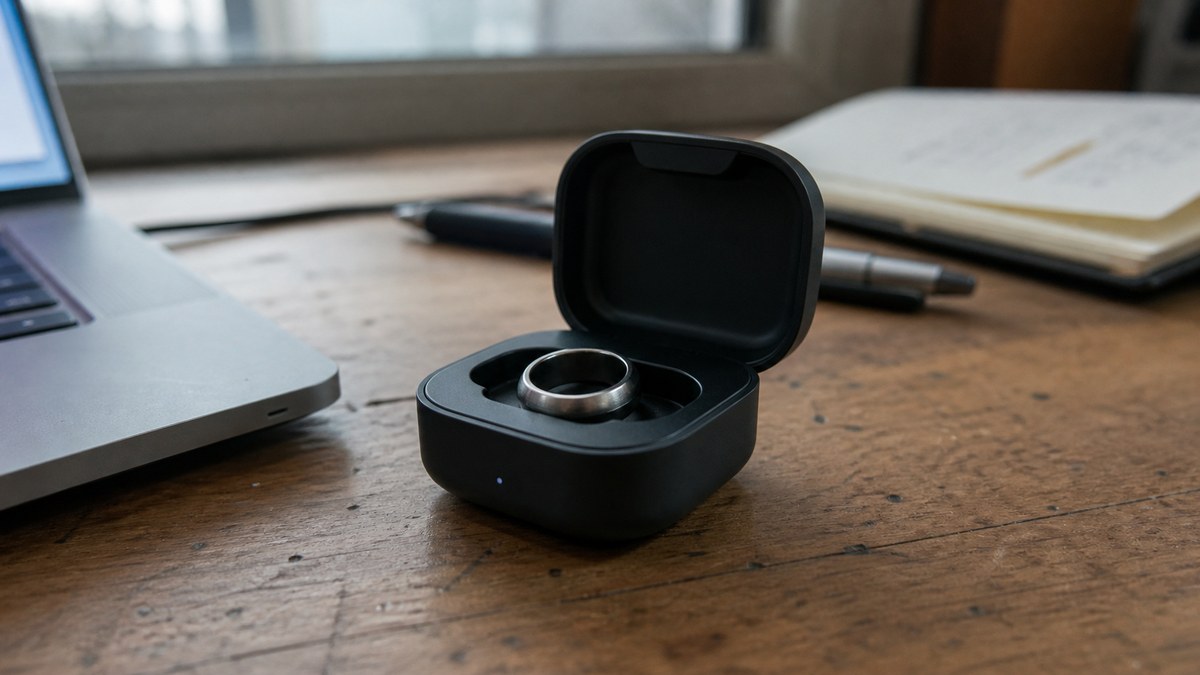
“Up to 14 Days of Power,” says RingConn of the Gen 3, with the Gen 2 rated at 10 to 12 days and the Air at around 10. Those are good numbers in a category where a smartwatch asks for the charger every second night.
The more interesting spec is the case. The Gen 2 ships with a charging case that extends total runtime to 150 days between wall charges, which effectively removes charging from your routine for five months at a time. The Gen 2 Air has no case: it charges from a magnetic puck in about 90 minutes. That single difference is worth more in daily life than most of the sensor spec sheet, and it is a large part of why the $100 gap between the Air and the Gen 2 is easier to justify than it looks.
Sizing, and the return policy trap
A ring has to fit, and this is where the buying process gets risky. RingConn ships a free sizing kit, and you should use it rather than guessing from a ring you already own. Gen 3 sizes do not match Gen 2 sizes, so even an existing owner upgrading needs to size again.
Now the part that is easy to miss. According to RingConn’s return and refund policy, you can return a product “within 14 calendar days if you have a valid reason”, but only when “the returned product is in its original condition as received and has not been opened and used”, and you cover the return shipping unless the item is faulty. In plain terms: this is not a try-it-for-a-month arrangement. Once you have worn the ring, the window is effectively closed. The warranty is separate and runs one year, or two years in EEA countries.
So the sequence matters. Order the sizing kit, wear the sizer for a couple of days including overnight when fingers swell, then order the ring. Doing it the other way round is how people end up with a $349 ring in the wrong size and no way back.
Which one to buy
- Gen 2 at $299 is the value pick. Sleep apnea monitoring, the 150-day case, 2 grams on the finger, and the same no-subscription promise. Unless you specifically want haptics, this is the one.
- Gen 3 at $349 is for the vibration alerts. A ring that can tap your finger for a silent alarm or a health flag is genuinely new, and the vascular insights are a real addition. Just do not buy it expecting medical blood pressure readings.
- Gen 2 Air at $199 is the entry ticket. Right for someone testing whether they will actually wear a ring every night, wrong for anyone whose main interest is breathing during sleep.
If you already own a smart ring or a smartwatch, check the trade-in first. RingConn offers up to $70 against an older RingConn and up to $60 against an Oura Ring, Galaxy Ring, Ultrahuman, Galaxy Watch or Apple Watch, which brings the Gen 3 close to Gen 2 money.
Frequently asked questions
Does RingConn require a subscription?
No. Every RingConn model, including the Gen 3, Gen 2 and Gen 2 Air, gives full access to its health tracking and app analysis for the purchase price alone. That is the brand’s main point of difference from Oura, which charges $5.99 a month or $69.99 a year for the membership that unlocks most of its features.
How much does RingConn cost in 2026?
The RingConn Gen 3 costs $349, the Gen 2 costs $299 and the Gen 2 Air costs $199 on RingConn’s own store. All three are HSA and FSA eligible in the US. A trade-in programme takes up to $70 off for an older RingConn, or up to $60 for an Oura Ring, Galaxy Ring, Ultrahuman, Galaxy Watch or Apple Watch.
What is the difference between RingConn Gen 2 and Gen 2 Air?
The Gen 2 costs $299, weighs about 2g, includes sleep apnea monitoring and ships with a charging case that extends runtime to 150 days. The Gen 2 Air costs $199, weighs 2.5 to 4g, drops sleep apnea monitoring and charges from a magnetic puck in about 90 minutes with no case included.
How long does the RingConn battery last?
RingConn rates the Gen 3 at up to 14 days, the Gen 2 at 10 to 12 days and the Gen 2 Air at up to 10 days, with actual life varying by ring size. The Gen 2 charging case extends total runtime to about 150 days before the case itself needs a wall charge.
Can I return a RingConn if the size is wrong?
Only if it is unopened. RingConn’s policy allows returns within 14 calendar days with a valid reason, provided the product has not been opened and used, and you pay the return shipping unless it is faulty. Order the free sizing kit and wear the sizer overnight before buying the ring.
Is RingConn accurate for sleep apnea?
RingConn states 90.7% accuracy for sleep apnea monitoring on the Gen 2. That is a manufacturer figure for detecting patterns, not a medical diagnosis, and the Gen 2 Air does not include the feature at all. Treat repeated alerts as a reason to see a doctor rather than as a clinical result.
The verdict
RingConn wins on the thing it chose to compete on. The hardware is light, the battery outlasts the category, and nobody asks you for $70 a year to see your own sleep stages. The app is the weaker half of the package, and the 14-day unopened return policy means you should treat sizing as the only step that really matters before you pay.
Buy the Gen 2 unless the Gen 3’s haptics solve a specific problem for you. It is the same test we applied to Big Ass Fans: work out what the cheaper option fails at, then decide whether that failure costs you anything.
Sources: RingConn product pages for the Gen 3, Gen 2 and Gen 2 Air, and the RingConn return and refund policy, all checked on ringconn.com; Oura membership pricing from ouraring.com. Prices, specs and policies change without notice. Confirm the current figures and the sizing chart for your model before ordering. Nothing here is medical advice.