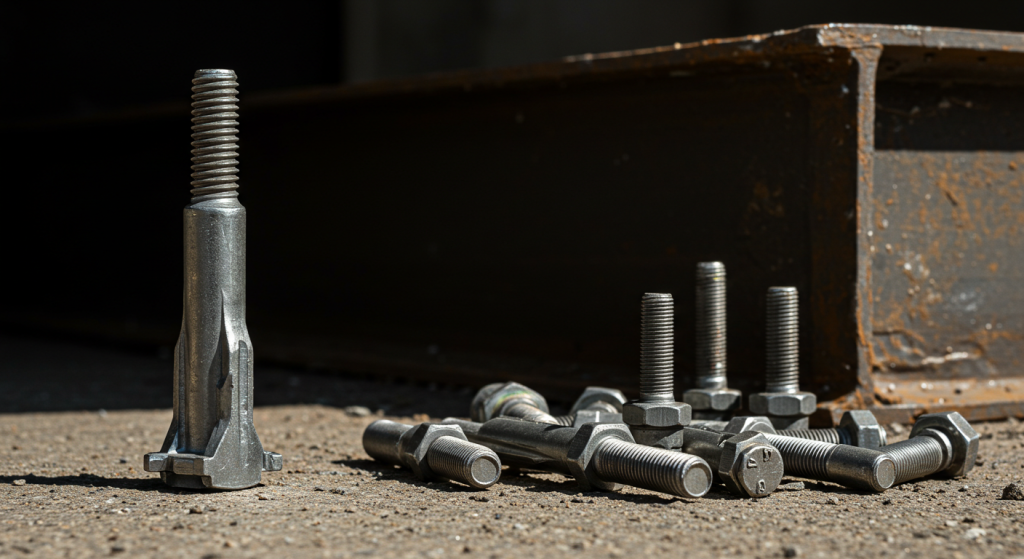
A few anchor foundation bolts push the load of every pump skid, turbine base, and steel column through concrete. The interface is faulty, but the uppermost point doesn’t hold any weight. The choice of anchoring system is a decision that affects code compliance, long-term safety, and the actual cost of rework over five years. For global construction and heavy industry, we are the manufacturer of anchor foundation bolts that comply with At JM Hardware® (Shanghai Jian & Mei Industry Trader Co., Ltd.). Our focus is on maintaining strength during cyclic loading, corrosion resistance to coastal and chemical conditions, and fitting geometry to an engineer’s engineering-designed embedment plan. The cheapest bolt on the BOM is seldom the most economical installation, as proven by practical experience of providing this type of item over time. If the spec is altered, the unit price will be overspent on tasks like setting up and fixing edges, edge distance corrections, and grout repairs.
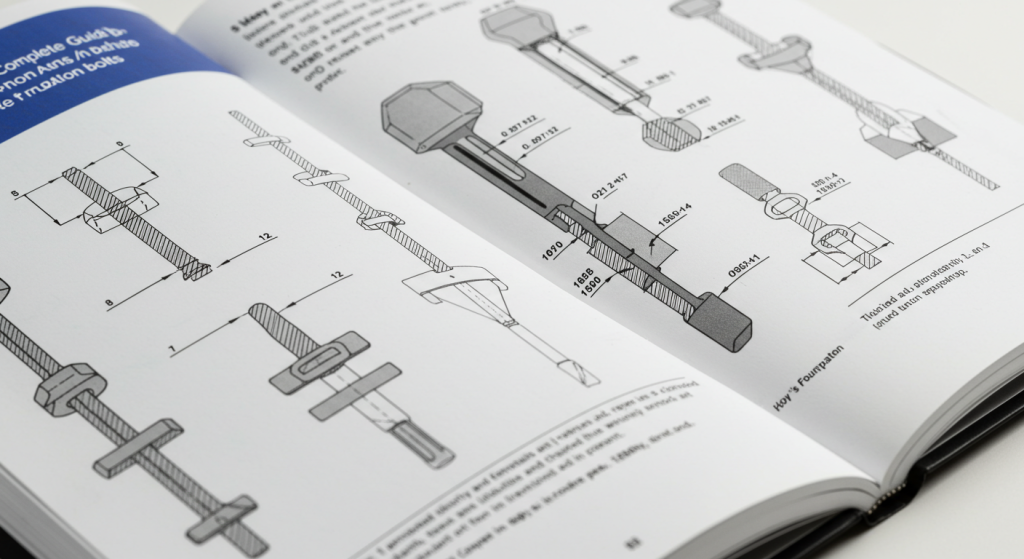
What Are Anchor Foundation Bolts?
Anchoring bolts that fix structural elements to concrete or masonry are commonly referred to as foundation bolt, structural anchor, and holding-down bolt. Their task involves load transfer from the structure to the foundation, ensuring that their connection remains unharmed even in the presence of wind uplift and seismic action. High-load applications in solid concrete are facilitated by wedge Anchors, which are commonly used. The sleeves can be used as a range of sleeve anchors and are versatile. Applications that are flush-mounted can use Drop -In Anchors. Use chemical anchors to enhance the resilience of unstable or fragile concrete. The selection process is based on factors such as load capacity, environment, and substrate. A wedge anchor that is ideal for fresh, uncracked C30 concrete can pull out of a hollow block wall; however, if the hole is dusty or wet and the cement is cracked, then whichever chemical anchor thrives in the casing and loses its case. The type chosen on paper is often not the same as the type used on site, which is why I have found this to be true in reviewing field installations. It is common for anchors to fail on Friday evenings, particularly at 6pm, as substitutions are typically the starting point for most of the failures.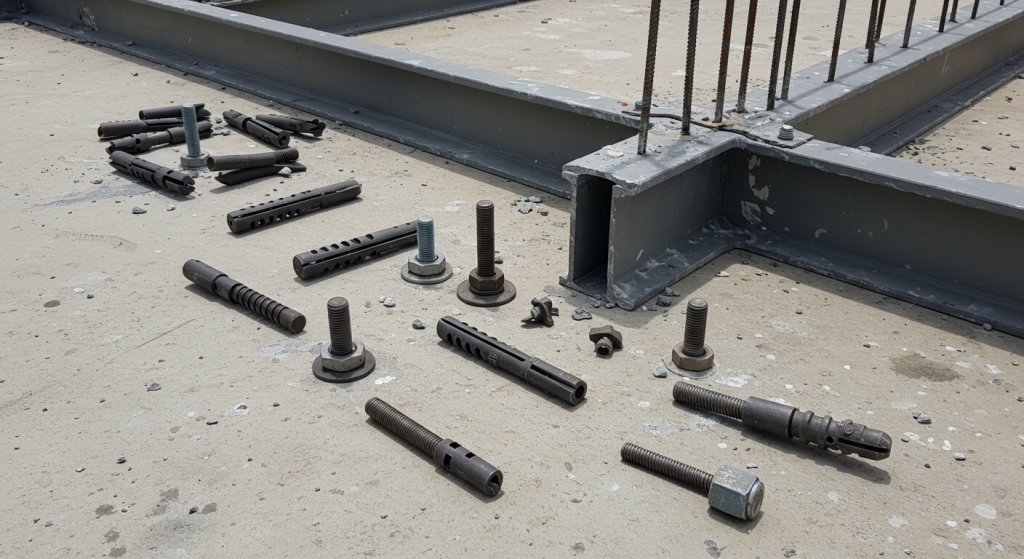
Industrial Applications of Anchor Foundation Bolts
The use of anchor bolts is widespread in the construction industry, covering a range of concrete-based surfaces from steel columns, pre-fabricated structures, and heavy machinery to concrete foundations. Building Systems: Ensuring that bridges, tunnel systems and highway networks are unified and stable. Investing in anchorage tools for wind turbines, oil rigs and power plants in the energy sector. manufacturing’: Embedding machinery in factory floors to reduce vibration and displacement . The safety-critical path is where the anchor bolt is placed through all of these. An important thing to remember is that the loading profile usually dictates which bolt will form, rather than considering the static weight. A reciprocating compressor at 30 kN dead load can fatigue-fail an anchor that would happily carry 100 kN of pure static tension, because every revolution cycles the joint near its preload limit.Why Source Anchor Bolts from JM Hardware®?
In China, anchor bolts are manufactured to spec and not sold under the table; JM Hardware® is known for this. Our bolts are made from high-strength carbon steel, stainless steel or alloy materials and have anti-corrosion coatings (hot-dip galvanizing or zinc plating) to ensure long wear life even in harsh environments. Precision Engineering: Every bolt is designed to meet international standards (e.g., ISO, ASTM, ASME B18.2.6) and is rigorously tested for tensile strength, shear resistance, and fatigue performance. We are capable of customizing our services to meet your specific project needs, including adjusting sizes and threadings for optimal compatibility with your design specifications. Global Supply Chain Efficiency: Based in Shanghai, we serve clients worldwide with reliable logistics and timely delivery, supported by our extensive experience in international trade. Technical Expertise and Support: Our team provides end-to-end support, from product selection and installation guidance to after-sales service, ensuring optimal performance and customer satisfaction. Despite its ability to protect against atmospheric corrosion, hot-dip galvanizing cannot replace stainless due to chloride-rich or chemical exposure. We will reject the offer if a buyer suggests HDG for cost-cutting in spruced-up areas.