Disclosure: This guide is independently written. Some links below are affiliate links, which means we may earn a small commission if you sign up through them — at no extra cost to you. It never changes which plan we recommend.
If you have shopped for a T-Mobile plan in the last year, you have probably noticed the names keep changing. Magenta became Go5G, Go5G became the Experience plans, and the old “unlimited” promises now come with a longer list of perks attached. Underneath all the rebranding, though, the question buyers actually care about is simpler: what does a postpaid plan really give me, and which tier should I pick?
I have spent the better part of a decade switching between the big three U.S. carriers, and postpaid is the plan structure most people end up on without fully understanding it. So let’s strip away the marketing and look at how T-Mobile postpaid works in 2026, what is bundled in, and how to choose a tier without overpaying.
What “postpaid” actually means
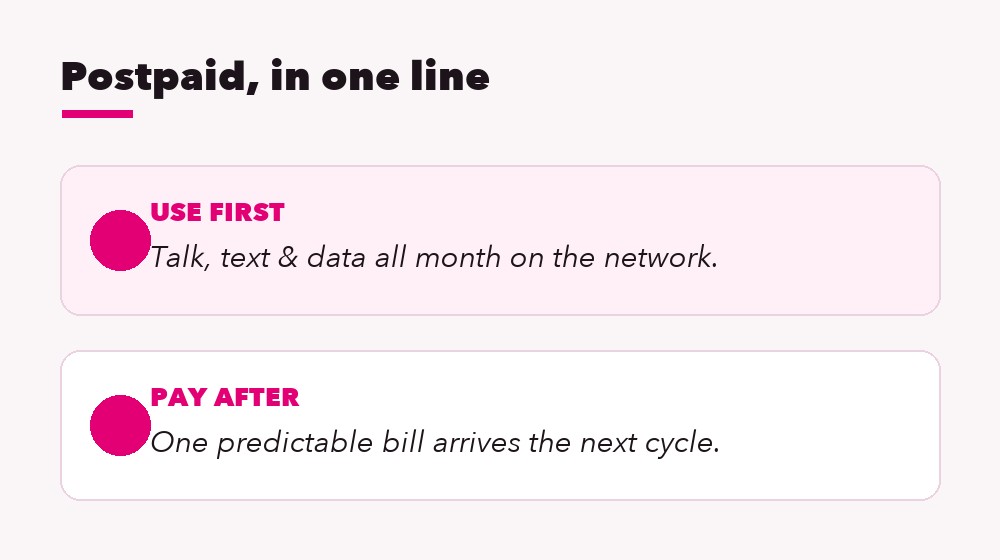
Quick answer: A postpaid plan lets you use your phone service — calls, texts, and data — throughout the month and pay the bill afterward. T-Mobile runs a soft or hard credit check when you sign up, then bills you on a fixed monthly cycle. It is the opposite of prepaid, where you pay up front before any usage.
That billing order is the whole difference. With prepaid you load money first and the service stops when it runs out. With postpaid you get the service first and settle up later, which is why a credit check exists. The trade-off is real: postpaid usually unlocks better device financing, more generous data, and the bundled perks carriers like to advertise.
The T-Mobile postpaid lineup in 2026
T-Mobile organizes its postpaid menu into three broad tiers. The marketing names have shifted over the years, but the structure has stayed remarkably consistent: a budget entry plan, a mainstream plan, and a top tier that piles on travel and streaming perks.
| Tier | Built for | Typically includes |
|---|---|---|
| Essentials | Budget-minded single lines | Unlimited talk, text & 5G data; taxes and fees added separately |
| ⭐ Experience More | Most households | More high-speed hotspot, streaming perk, taxes & fees included |
| Experience Beyond | Frequent travelers & heavy users | Largest hotspot allotment, expanded international data, premium streaming |
Prices move with promotions, line count, and autopay discounts, so any number I print here would be stale within weeks. The honest move is to pull up the live rate before you commit.
See Current T-Mobile Postpaid Offers →
Live pricing and the latest line-count promotions
What’s bundled into a postpaid plan
The reason most people accept the credit check and the higher sticker price is the bundle. On the mid and top tiers especially, a lot of the things rival carriers sell as add-ons are simply part of the plan.
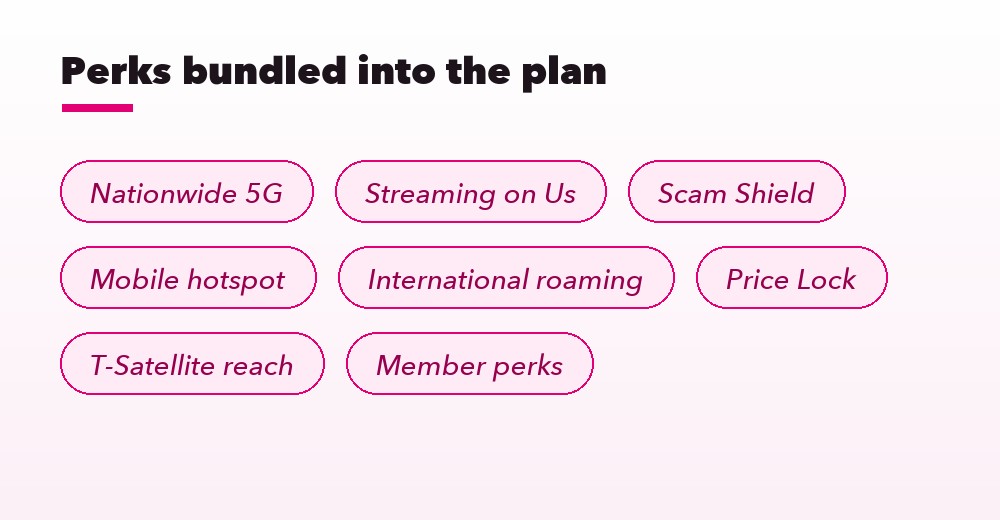
- Nationwide 5G is included on every postpaid tier, with the faster Ultra Capacity layer prioritized higher on the premium plans.
- Streaming on Us. Depending on the tier, a streaming subscription (such as a Netflix or Apple TV+ plan) is bundled for the account.
- Taxes and fees included. On the Experience tiers, the advertised per-line price is what you actually pay — a genuinely nice change from line items that creep onto the bill.
- Mobile hotspot data scales with the tier, so heavier remote workers will want to look up the high-speed allotment before choosing.
- International data and texting in well over 200 countries and destinations, with more high-speed data on the top tier.
- Scam Shield for caller ID and spam blocking, plus Price Lock, which protects your plan’s rate from standard increases.
- T-Satellite coverage extends basic connectivity to dead zones where cell towers don’t reach, using a low-orbit satellite network.
If you only ever use your phone for calls and a little browsing, a lot of this is wasted on you — and that is exactly the point of the Essentials tier. The perks earn their keep on the higher plans, where the streaming and travel inclusions can offset subscriptions you already pay for elsewhere. You can compare what each tier bundles against what you currently pay piecemeal.
Who T-Mobile postpaid is actually for
👍 A good fit if you…
- Want one predictable bill and don’t want to top up manually
- Plan to finance a phone over 24 months
- Have multiple lines and benefit from family pricing
- Travel internationally and value built-in roaming
- Already pay for streaming the plan would replace
👎 Maybe skip it if you…
- Want to avoid a credit check entirely
- Use very little data and never travel
- Prefer a hard spending cap each month
- Only need a single, bare-bones line
For the second group, T-Mobile’s prepaid and Metro options usually make more sense. Postpaid is built for people who want the network and the bundle and are comfortable being billed in arrears.
How to pick the right tier without overpaying
My rule of thumb after years of switching: start one tier lower than the salesperson suggests. Carriers make their margin on the top plan, and most households genuinely do fine on the middle tier. Walk through these three checks:
- Count your real data and hotspot use. Pull last month’s usage from your current carrier’s app. If you rarely break 30–40 GB or tether much, the mid tier is plenty.
- List the streaming you already pay for. If a plan bundles a service you’d keep anyway, that inclusion is real money back. If you’d never use it, ignore it in the comparison.
- Add up lines and autopay. Per-line pricing drops sharply at three and four lines, and autopay discounts are easy to forget when you’re eyeballing the sticker price.
Once you know your data ceiling and which perks you’ll actually use, the right tier usually picks itself. When you’re ready to lock in current promotional pricing, check the latest T-Mobile postpaid deals — line-count offers in particular tend to rotate.
🏆 Bottom line
T-Mobile postpaid is the right call if you want a single predictable bill, generous data, and a perks bundle that can replace subscriptions you already buy. Pick Essentials to keep it lean, Experience More for the sweet spot, and Experience Beyond only if you travel or tether heavily.
Frequently asked questions
Does T-Mobile postpaid require a credit check?
Yes. Because you pay after using the service, T-Mobile runs a credit check when you open a postpaid account. Your result can affect whether a deposit is required and the device-financing terms you qualify for. If you want to avoid a credit check, prepaid is the alternative.
What is the difference between T-Mobile postpaid and prepaid?
Postpaid means you use the service first and pay afterward on a monthly bill, with a credit check at signup. Prepaid means you pay in advance and service stops when your balance or data runs out, with no credit check. Postpaid usually unlocks better financing and more perks; prepaid offers a hard spending cap.
Are taxes and fees included in T-Mobile postpaid plans?
On T-Mobile’s premium postpaid tiers (the Experience plans), taxes and monthly fees are included in the advertised per-line price. On the entry-level Essentials plan, taxes and fees are typically added on top of the base rate.
Can I finance a phone on a T-Mobile postpaid plan?
Yes. Device financing — paying for a phone in monthly installments, often with promotional bill credits — is one of the main reasons people choose postpaid over prepaid. Approval and the credit amount depend on the credit check at signup.
Which T-Mobile postpaid plan is best for most people?
For most households the mid tier (Experience More) hits the sweet spot: it includes taxes and fees, a solid hotspot allotment, and a streaming perk without paying for the heaviest travel inclusions. Choose Essentials to minimize cost, or Experience Beyond if you travel internationally or tether heavily.
Plan names, inclusions, and pricing are set by T-Mobile and change over time; confirm current details on the official T-Mobile website before signing up. This article reflects the postpaid structure as of 2026.